PPWR 2026: Packaging Compliance for Products Sold in the EU
The Packaging and Packaging Waste Regulation reshapes how manufacturers document, label, and design packaging. Here is what you need for PPWR readiness in 2026.
Thibault Helle
The EU Packaging and Packaging Waste Regulation (PPWR) is one of the most significant packaging law updates in a decade. For manufacturers placing packaged goods on the EU market, PPWR is no longer a distant policy debate, it is an operational compliance program that touches product design, supplier data, labeling, and technical documentation.
What PPWR Changes for Manufacturers
PPWR replaces the old Packaging Directive with a regulation that applies directly across all member states. Instead of fragmented national packaging rules, manufacturers face harmonized obligations on:
- Packaging minimization: Packaging must be reduced to what is strictly necessary for protection, hygiene, and logistics.
- Recyclability and recycled content: Performance grades and recycled-content targets apply to plastic and other packaging formats on defined timelines.
- Reuse systems: Transport and grouped packaging in B2B supply chains must meet reuse targets where applicable.
- Extended producer responsibility (EPR): Producers remain financially responsible for collection, sorting, and recycling, now with stricter reporting.
- Documentation and conformity: A packaging technical file and EU declaration of conformity are required for packaging placed on the market as part of a product system.
If your company sells physical products in the EU, cosmetics, food contact goods, electronics, industrial components, or consumer hardware, you almost certainly have PPWR exposure through primary, secondary, or tertiary packaging.
Who Is Responsible?
Under PPWR, the manufacturer placing packaged products on the EU market bears primary responsibility. Importers and distributors also have obligations when they introduce packaging under their own brand or modify packaging design.
Responsibility does not stop at the outer carton. You must account for:
- Retail packaging seen by consumers
- Grouped or shipment packaging used in distribution
- Component packaging that becomes waste after product installation
- Labels, inserts, and packaging-like items that meet the PPWR definition of packaging
Key 2026 Readiness Steps
1. Map Your Packaging Portfolio
Create an inventory of every packaging format per SKU: material composition, weight, dimensions, inks, adhesives, and whether food-contact or hazardous-goods rules also apply. Most compliance gaps start with incomplete packaging bills of materials.
2. Assess Recyclability and Minimization
Evaluate each format against PPWR recyclability criteria and design-for-recycling guidance. Document why a given packaging level exists and what alternatives were rejected. Authorities expect evidence of minimization decisions, not just final artwork.
3. Build the Packaging Technical File
Similar in spirit to a CE technical file, your PPWR documentation should include:
- Packaging descriptions and material breakdown
- Test evidence or supplier declarations for recyclability claims
- Recycled-content documentation where claimed
- Compliance with restricted substances (including REACH and food-contact rules where relevant)
- EPR registration references and country-specific reporting
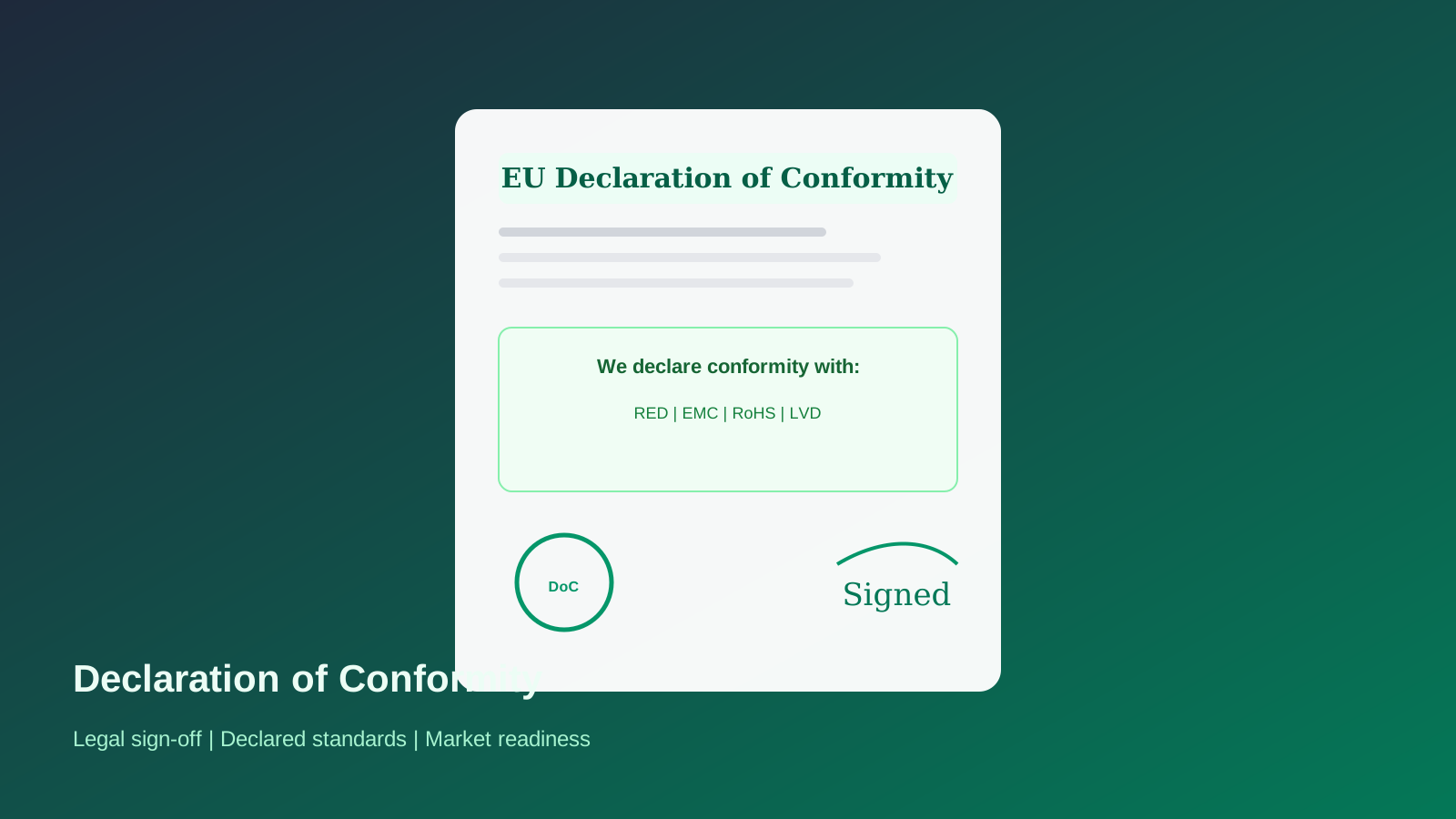
- EU declaration of conformity for the packaging
4. Align Labeling and Consumer Information
Material identification, sorting instructions, and harmonized labeling elements must be planned early, retrofitting artwork after print runs is expensive. Coordinate with marketing and fulfillment teams so digital and physical labels stay consistent.
5. Integrate Suppliers and Design Changes
Packaging compliance fails when procurement switches suppliers without re-assessment. Treat packaging changes like product design changes: trigger a conformity review, update the technical file, and re-issue declarations when needed.
PPWR vs CE Marking: How They Fit Together
PPWR is not a replacement for CE marking, but the two regimes increasingly overlap in the same product launch. A wireless consumer device may need RED/EMC/LVD/RoHS conformity and PPWR packaging documentation before it can be sold legally in the EU.
Smart manufacturers unify both into one product compliance record: shared supplier data, one change-control process, and a single technical-documentation workspace rather than siloed CE and packaging folders.
Common Mistakes in 2026
- Treating PPWR as “only a packaging team problem” while product and quality teams stay uninvolved
- Relying on generic supplier statements without material-level evidence
- Missing grouped or transport packaging in scope
- Launching new SKUs before EPR registrations are active in target member states
- Using outdated national packaging rules instead of the harmonized PPWR framework
Practical Timeline for Product Teams
Even where some PPWR obligations phase in over several years, market access risk appears earlier. Retailers, marketplaces, and national authorities are already asking for packaging documentation during onboarding audits.
A sensible 2026 program looks like this:
- Q1: Complete packaging inventory and gap analysis
- Q2: Close supplier evidence gaps and finalize recyclability assessments
- Q3: Publish packaging technical files and declarations for priority SKUs
- Q4: Automate change control and link packaging data to product master records
Platforms that combine product certification workflows with document-grounded AI assistance can dramatically reduce the manual effort of building packaging technical files, especially when evidence arrives as PDF datasheets, lab reports, and supplier declarations scattered across email and shared drives.