GPSR 2026: General Product Safety Regulation, What Manufacturers Must Do Now
The GPSR replaced the old General Product Safety Directive in December 2024. In 2026, enforcement is tightening, here is how to stay compliant.
Thibault Helle
The EU General Product Safety Regulation (GPSR, Regulation (EU) 2023/988) is now the baseline safety framework for consumer products sold in the EU, even when no specific CE directive applies. If you manufacture or distribute consumer goods in 2026, GPSR is not optional background law; it defines how you assess risks, document products, and cooperate with market surveillance.
GPSR vs the Old GPSD: What Actually Changed
The General Product Safety Directive (GPSD) was transposed differently in each member state, creating uneven enforcement. GPSR harmonizes obligations as EU-wide regulation. Major shifts include:
- Direct applicability: No national transposition gaps, rules apply uniformly across the EU.
- Online marketplace obligations: Platforms must cooperate with authorities and can be required to remove unsafe listings quickly.
- Responsible person in the EU: Non-EU manufacturers must have a clearly identified EU-based responsible economic operator for consumer products.
- Product safety internal risk analysis: Documented risk assessment is expected before placing products on the market.
- Traceability and incident readiness: Batch/serial traceability and procedures for recalls and safety notices are explicitly required.
- Alignment with Regulation (EU) 2019/1020: GPSR integrates with market-surveillance rules on documentation and cooperation duties.
Which Products Are in Scope?
GPSR covers consumer products that are not already fully regulated by sector-specific EU harmonization legislation, or where GPSR fills gaps for aspects not covered elsewhere.
Examples commonly affected:
- Low-voltage consumer accessories not fully within LVD scope
- Furniture, household goods, and personal accessories
- Children's products outside the Toy Safety Directive
- Sporting and leisure goods
- Products sold online from non-EU sellers into the EU
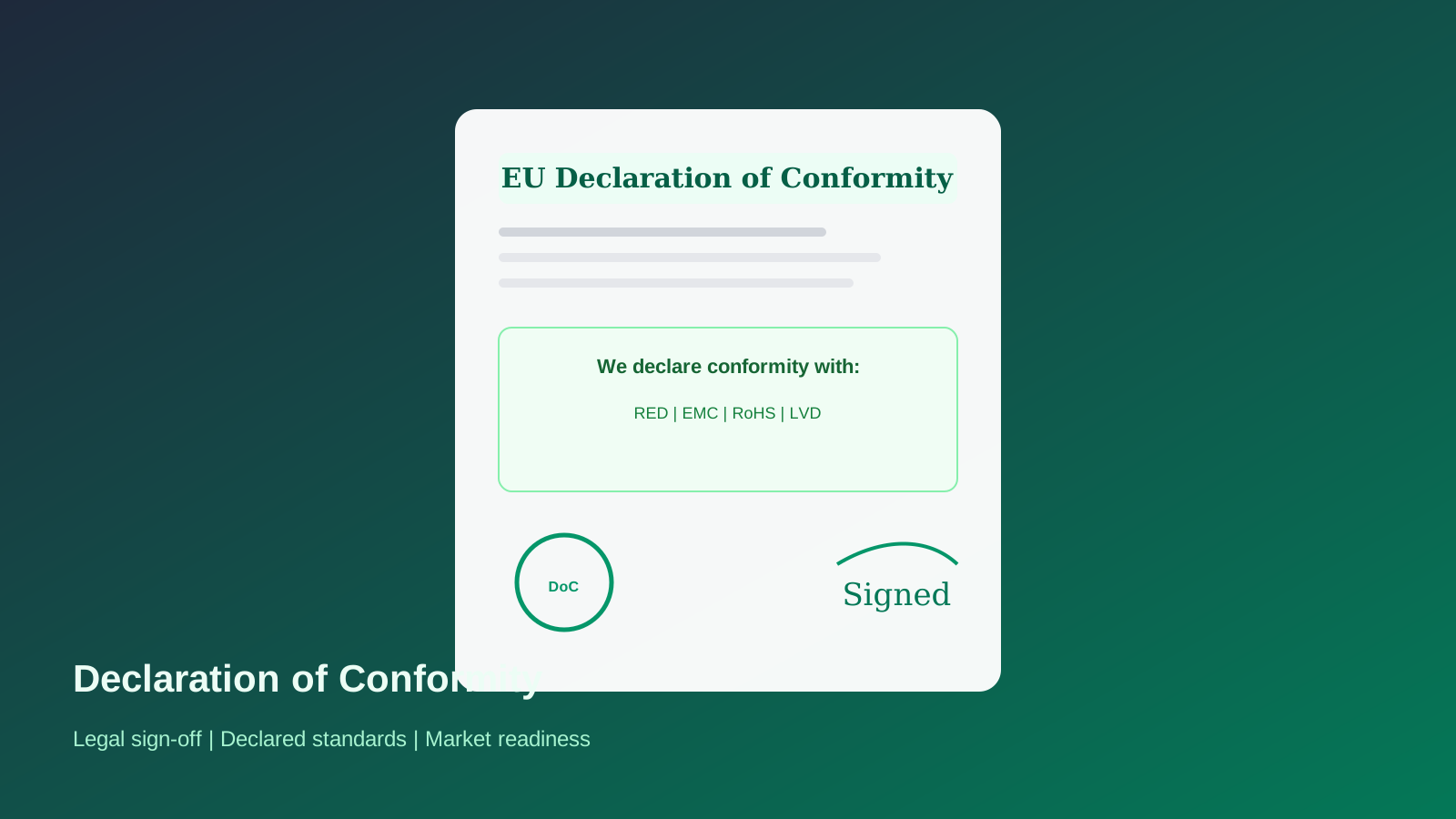
Even when your product bears CE marking under RED, EMC, or LVD, GPSR can still apply to aspects such as mechanical hazards, chemical exposure from non-electrical parts, or labeling and traceability expectations for the product as a whole.
Core Manufacturer Obligations in 2026
1. Internal Product Safety Risk Analysis
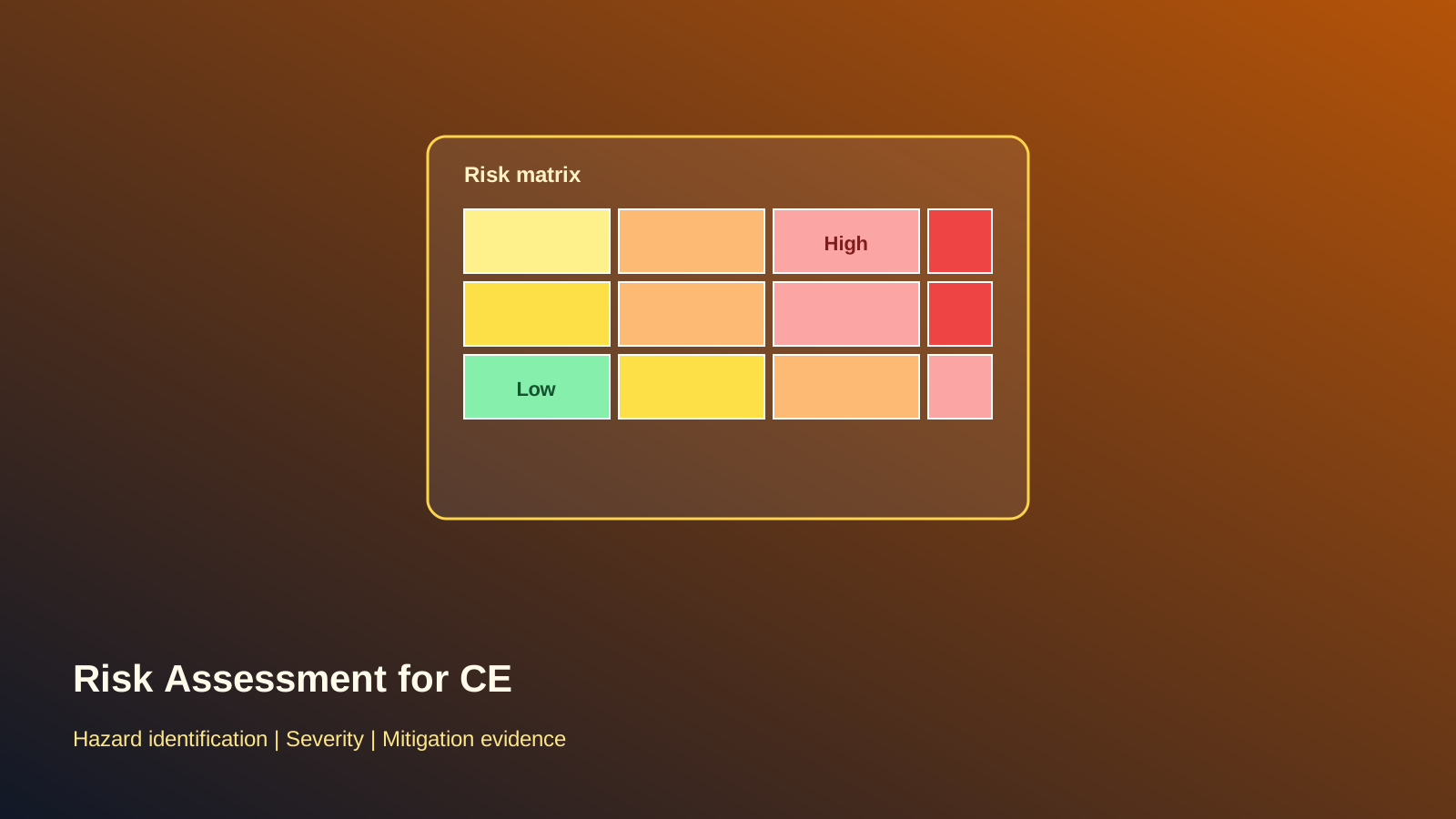
Before market placement, perform and document a product safety risk analysis proportionate to the product type. This is distinct from, but complementary to, a CE risk assessment under sector directives. Include foreseeable use and misuse, vulnerable users, and environmental conditions.
2. Technical Documentation
Maintain documentation demonstrating compliance with general safety requirements: design specifications, test reports, standards applied, warnings, and instructions. Authorities can request this documentation during inspections or after incidents.
3. Labeling, Instructions, and Warnings
Provide clear safety information in a language easily understood by consumers in the member state of sale. Warnings must be visible and durable where risk cannot be eliminated by design.
4. Traceability
Products must bear a type, batch, or serial identifier, or another element allowing traceability. This is critical for targeted recalls and is increasingly checked by marketplaces during seller verification.
5. Incident Reporting and Corrective Action
Manufacturers must investigate complaints and safety-related information. Serious risks trigger notification through the Safety Gate (RAPEX successor) system and may require recalls or public warnings.
6. EU Responsible Person (for non-EU manufacturers)
If you manufacture outside the EU, appoint a responsible person established in the Union who holds documentation and cooperates with authorities. Importers can serve this role in some supply-chain models, but the assignment must be explicit and documented.
GPSR and Online Sales
Marketplaces are now part of the compliance ecosystem. They may request proof of GPSR conformity, responsible-person details, and product documentation before listing approval. Sellers who cannot demonstrate traceability or safety documentation face delisting, even if the underlying product “looks compliant.”
For brands selling D2C into the EU, treat marketplace GPSR checks as a preview of what market surveillance authorities will expect offline.
Building a GPSR Compliance Program
- Product register: List every consumer SKU sold in the EU with responsible person, applicable legislation, and documentation location.
- Risk analysis library: Standardize templates by product family; link hazards to test evidence and warnings.
- Documentation pack: Merge GPSR files with CE technical files where overlap exists, avoid duplicate folders.
- Post-market monitoring: Track returns, reviews, and field incidents as safety signals.
- Recall playbook: Pre-define decision trees, notification templates, and logistics for corrective actions.
What Authorities Are Looking for in 2026
Enforcement focus areas include:
- Products sold online without an EU responsible person
- Missing or generic instructions and warnings
- Inadequate traceability markings on low-cost imports
- Failure to submit Safety Gate notifications after known incidents
- Cosmetic “CE-looking” marks on products outside harmonized scope
Penalties vary by member state but can include sales bans, destruction of stock, fines, and reputational damage that outlasts the immediate regulatory action.
Getting Ahead with Integrated Compliance
GPSR rewards manufacturers who treat product safety documentation as a living system, not a PDF created once at launch. When product teams, quality, and regulatory share one workspace, updates from design changes, new suppliers, or test results flow into both CE and GPSR records automatically.
That integrated approach is especially valuable in 2026 as market surveillance, marketplace gatekeeping, and customer expectations all converge on the same question: Can you prove this product is safe, and traceable, right now?