How to Conduct a Risk Assessment for CE Marking: Step-by-Step Guide
Risk assessment is mandatory for CE marking compliance. Learn the complete process of identifying hazards, evaluating risks, and documenting mitigation measures.
Thibault Helle
Risk assessment is a fundamental requirement for CE marking across virtually all product categories. This detailed guide walks you through the entire process.
Why Risk Assessment is Mandatory
EU directives require manufacturers to:
- Identify all potential hazards
- Evaluate associated risks
- Implement measures to eliminate or reduce risks
- Document the entire process
A proper risk assessment protects users and demonstrates due diligence to authorities.
Risk Assessment Framework
The standard risk assessment process follows ISO 12100 methodology:
- Risk Analysis: Identify hazards and estimate risk levels
- Risk Evaluation: Determine if risks are acceptable
- Risk Reduction: Implement control measures
- Documentation: Record the entire process
Step 1: Determine Intended Use and Reasonably Foreseeable Misuse
Define Intended Use
Document:
- Target users (professional, consumer, age groups)
- Operating environment
- Intended application
- User skill level required
- Operational limits
Identify Foreseeable Misuse
Consider:
- Obvious misuse scenarios
- Common user errors
- Children accessing adult products
- Defeat of safety features
- Inadequate maintenance
Step 2: Identify Hazards
Systematically identify all potential hazards across categories:
Mechanical Hazards
- Sharp edges and corners
- Moving parts and crushing points
- Ejected parts or projectiles
- Unstable structures
- Stored energy release
Electrical Hazards
- Electric shock
- Burns from hot surfaces
- Fire from overheating
- Electromagnetic interference
- Electrostatic discharge
Thermal Hazards
- Extreme temperatures
- Hot surfaces
- Flames and explosions
- Thermal radiation
Noise and Vibration
- Excessive noise levels
- Harmful vibrations
- Long-term exposure effects
Radiation Hazards
- Ionizing radiation
- Non-ionizing radiation (RF, lasers)
- UV exposure
Materials and Substances
- Toxic materials
- Carcinogenic substances
- Allergens
- Flammable materials
Ergonomic Hazards
- Poor design causing strain
- Mental stress
- Human-machine interface issues
Environmental Conditions
- Operating temperature range
- Humidity and moisture
- Dust and contamination
- Electromagnetic environment
Step 3: Risk Estimation
For each identified hazard, estimate risk using two factors:
Severity of Harm
Rate potential injury:
- 1 - Minor: Reversible injuries (bruises, minor cuts)
- 2 - Moderate: Reversible but requiring medical attention
- 3 - Serious: Irreversible injury (lost limb, hearing loss)
- 4 - Fatal: Death or life-threatening injury
Probability of Occurrence
Consider:
- Frequency and duration of exposure
- Probability of hazardous event
- Possibility of avoiding or limiting harm
Rate probability:
- 1 - Negligible: Extremely unlikely
- 2 - Low: Unlikely but possible
- 3 - Medium: Possible under specific conditions
- 4 - High: Likely to occur
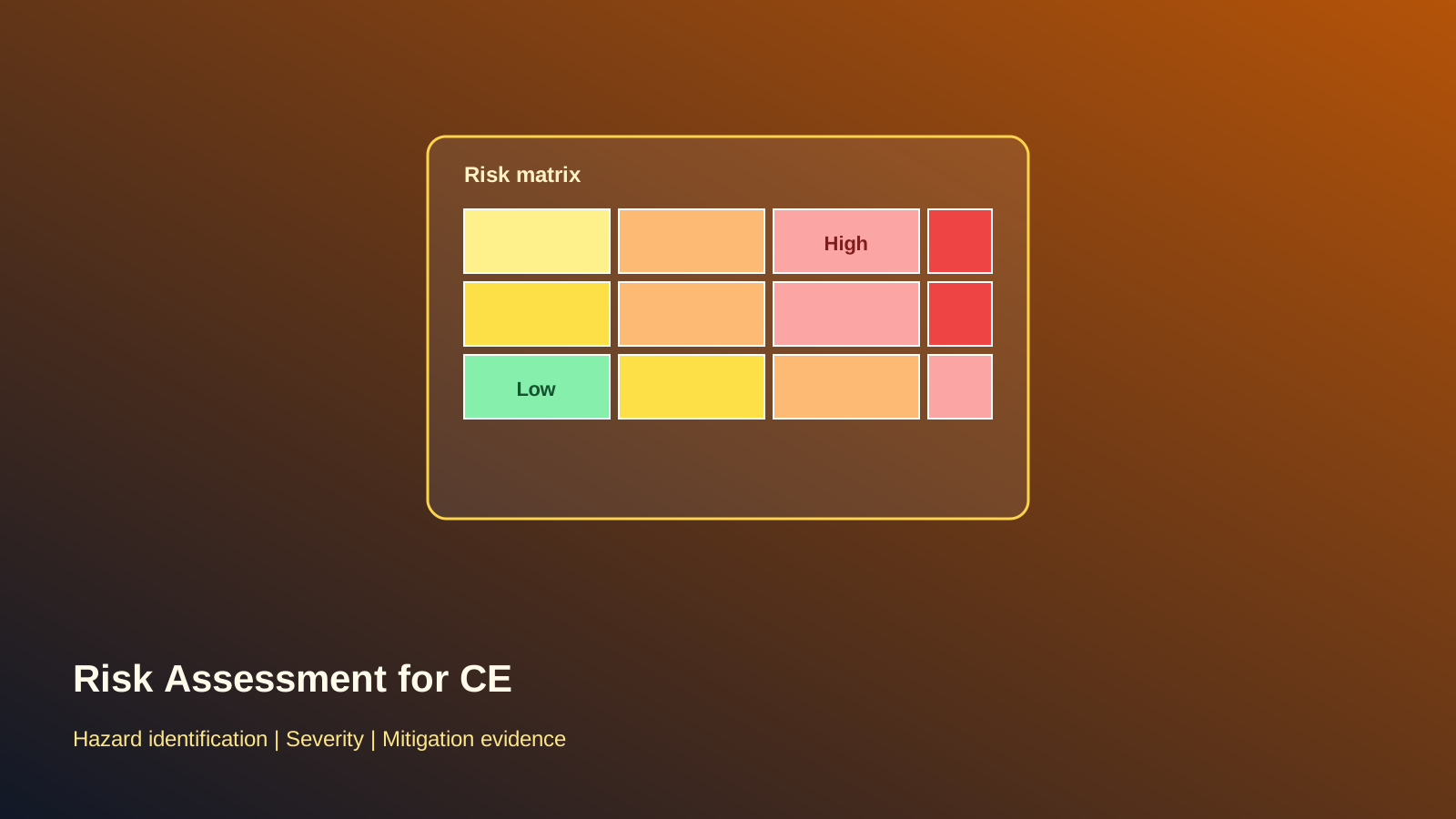
Calculate Initial Risk Level
Risk = Severity × Probability
- 1-4: Low risk (acceptable)
- 5-9: Medium risk (reduce if reasonably practicable)
- 10-16: High risk (mandatory reduction)
Step 4: Risk Evaluation
Determine acceptability based on:
- Legal requirements
- Industry standards
- State of the art
- Cost-benefit analysis
- ALARP principle (As Low As Reasonably Practicable)
Step 5: Risk Reduction Measures
Apply the three-step method in order:
Step 5a: Inherently Safe Design
First priority - eliminate hazards by design:
- Remove sharp edges
- Use safer materials
- Limit temperatures
- Reduce noise at source
- Choose lower voltage
Step 5b: Technical Protective Measures
If hazards cannot be eliminated:
- Guards and shields
- Safety interlocks
- Emergency stops
- Protective circuits
- Automatic shut-offs
Step 5c: Information for Use
Final step - warn users:
- Safety warnings
- User manual instructions
- Training requirements
- Protective equipment needed
- Residual risk information
Step 6: Residual Risk Assessment
After implementing controls:
- Re-evaluate risk levels
- Ensure reduction is adequate
- Document residual risks
- Include warnings for residual risks
Step 7: Documentation
Create comprehensive risk assessment documentation:
Risk Assessment Report Must Include:
- Introduction
- Product description
- Intended use statement
- Applicable standards
- Risk Analysis
- Hazard identification table
- Risk estimation matrix
- Initial risk levels
- Risk Evaluation
- Acceptability criteria
- Decisions on each risk
- Risk Reduction
- Control measures implemented
- Protective measures description
- Warnings and instructions
- Residual Risk Assessment
- Post-mitigation risk levels
- Remaining hazards
- User information
- Conclusions
- Overall risk acceptability
- Compliance statement
- Sign-off by responsible person
Risk Assessment Matrix Template
| Hazard ID | Description | Severity | Probability | Initial Risk | Control Measures | Residual Risk |
|---|---|---|---|---|---|---|
| H-001 | Sharp edge | 2 | 3 | 6 | Rounded edges | 2 |
| H-002 | Electric shock | 4 | 2 | 8 | Double insulation | 4 |
Common Risk Assessment Mistakes
- Incomplete hazard identification: Missing non-obvious hazards
- Subjective risk scoring: Inconsistent severity/probability ratings
- Skipping design changes: Over-relying on warnings
- Poor documentation: Insufficient detail or justification
- Forgetting reasonably foreseeable misuse: Only considering normal use
- Not updating: Failing to revise when product changes
Product-Specific Considerations
Electrical Products
- Focus on LVD requirements
- IEC 62368-1 hazard-based safety
- Protection against electric shock
Machinery
- EN ISO 12100 risk assessment
- Mechanical hazards prominent
- Lock-out/tag-out procedures
Medical Devices
- ISO 14971 risk management
- Benefit-risk analysis
- Post-market surveillance
Radio Equipment
- Electromagnetic exposure limits
- Interference risks
- RF radiation hazards
Risk Assessment Best Practices
Successful risk assessments require systematic approaches and attention to detail:
Early Integration
Start During Product Design:
- Integrate risk assessment from concept phase
- Identify hazards before design is finalized
- Design out hazards rather than add warnings
- Iterative risk assessment throughout development
- Cost-effective hazard elimination early
Benefits of Early Integration:
- Reduced redesign costs
- Better safety outcomes
- Faster time to market
- Lower overall compliance costs
- More robust product design
Cross-Functional Team Approach
Include Multiple Perspectives:
- Engineering: Technical hazard identification
- Quality: Manufacturing process risks
- Marketing: User behavior insights
- Field service: Real-world failure modes
- Safety experts: Regulatory requirements
Team Collaboration:
- Regular risk review meetings
- Documented decision-making
- Consensus on risk acceptability
- Clear responsibility assignments
- Collective ownership of safety
Systematic Documentation
Complete Records:
- Document all identified hazards (even low-risk)
- Record risk evaluation decisions and rationale
- Justify control measure selection
- Explain residual risk acceptability
- Maintain traceability to product versions
Documentation Benefits:
- Authority audit readiness
- Liability protection
- Design history reference
- Continuous improvement input
- Training resource for new team members
Practical Risk Assessment Tips
Hazard Identification Techniques
Brainstorming Sessions:
- Structured team workshops
- No criticism during generation phase
- Build on others' ideas
- Record all suggestions
- Categorize and evaluate later
Historical Data Analysis:
- Review incidents with similar products
- Analyze warranty claims and returns
- Study competitor product recalls
- Research industry accident data
- Learn from past mistakes
Task Analysis:
- Break down all user interactions
- Identify each step's hazards
- Consider sequence variations
- Evaluate environmental factors
- Account for degraded conditions
What-If Analysis:
- "What if the user does X?"
- "What if component Y fails?"
- "What if condition Z occurs?"
- Systematic questioning approach
- Challenge assumptions
Risk Scoring Consistency
Establish Clear Criteria:
- Define severity levels with examples
- Create probability rating guidelines
- Use reference scenarios
- Document scoring rationale
- Maintain consistent application
Review and Calibration:
- Periodic team calibration sessions
- Compare scoring across similar hazards
- Adjust criteria based on experience
- Independent review of high risks
- Document any scoring deviations
Control Measure Selection
Hierarchy Application:
- Always try elimination first
- Consider multiple mitigation options
- Compare cost-benefit of alternatives
- Select most effective feasible measures
- Document why alternatives weren't chosen
Verification of Effectiveness:
- Test control measures
- Measure actual risk reduction
- Confirm residual risk acceptability
- Document verification evidence - Re-assess if targets not met
How AI Simplifies Risk Assessment
AI-powered platforms can:
- Suggest hazards based on product category
- Pre-fill common risk scenarios
- Calculate risk matrices automatically
- Recommend control measures
- Generate compliant documentation
- Flag incomplete assessments
Tools and Standards
Key standards for risk assessment:
- ISO 12100: General machinery safety risk assessment
- IEC 62368-1: Audio/video equipment hazard-based safety
- ISO 14971: Medical device risk management
- IEC 31010: Risk assessment techniques
Maintaining Your Risk Assessment
Update risk assessments when:
- Product design changes
- New hazards identified
- Incidents or near-misses occur
- Standards updated
- Manufacturing processes change
Your risk assessment is a living document requiring regular review throughout product lifecycle.
Regular Review Schedule
Planned Reviews:
- Annual comprehensive review minimum
- Quarterly reviews for high-risk products
- Triggered reviews for specific changes
- Post-market surveillance integration
- Continuous improvement cycle
Review Triggers:
- Design modifications
- Customer complaints
- Field failure reports
- Regulatory changes
- New hazard information
Update Process
Systematic Revision:
- Identify what changed
- Assess impact on existing hazards
- Identify new hazards
- Re-evaluate affected risks
- Update control measures if needed
- Document changes and rationale
- Obtain appropriate approvals
- Communicate to stakeholders
Version Control:
- Clear version numbering
- Change history documentation
- Superseded version archival
- Traceability to product variants
- Distribution list management
Common Pitfalls and Solutions
Pitfall: Treating Risk Assessment as Checkbox Exercise
Problem: Rushing through risk assessment to "check the box"
Consequence: Inadequate hazard identification, ineffective controls, compliance failures
Solution: Allocate adequate time and resources, engage experienced personnel, integrate into development process
Pitfall: Over-Reliance on Warnings
Problem: Using warnings instead of design improvements
Consequence: Residual risks too high, potential liability, regulatory rejection
Solution: Follow three-step method strictly, exhaust design and protective measures before warnings
Pitfall: Inadequate Reasonably Foreseeable Misuse Analysis
Problem: Only considering intended use scenarios
Consequence: Missing hazards that occur during misuse
Solution: Systematic misuse analysis, user testing, field data review
Pitfall: Inconsistent Risk Scoring
Problem: Subjective or inconsistent severity/probability ratings
Consequence: Risk prioritization errors, inadequate controls
Solution: Clear scoring criteria, team calibration, independent review
Real-World Risk Assessment Example
Product: Cordless Power Drill
Hazard: Rotating drill bit causing hand injury
Initial Risk:
- Severity: 3 (Serious - laceration requiring medical attention)
- Probability: 3 (Medium - possible if user places hand near bit during operation)
- Initial Risk Score: 9 (Medium-High)
Control Measures Applied:
- Inherent Safety (Design):
- Trigger requires constant pressure (releases = stops)
- Bit stops rotating within 2 seconds of trigger release
- Chuck shield extends 5mm beyond bit when installed
- Protective Measures:
- Two-handed operation required
- Safety guard protects non-trigger hand
- Emergency brake activates on trigger release
- Information for Use:
- Warning label on tool body
- User manual safety section
- Training recommendations
Residual Risk:
- Severity: 3 (unchanged - injury still possible)
- Probability: 1 (Negligible - multiple safeguards make occurrence very unlikely)
- Residual Risk Score: 3 (Low - Acceptable)
Documentation: Complete records of hazard analysis, control measure selection rationale, and verification testing results included in technical file.
Conclusion
Risk assessment is not merely a regulatory requirement, it's a systematic process that makes products safer and protects manufacturers from liability. By following established methodologies, documenting thoroughly, and using modern tools, manufacturers can conduct effective risk assessments that satisfy regulatory requirements while genuinely improving product safety.
Master risk assessment with AI-guided tools and templates designed for CE marking compliance. Whether you're new to risk assessment or looking to optimize your process, systematic approaches and proper documentation are keys to success.