How AI is Transforming Product Compliance and Certification
Artificial intelligence is revolutionizing how manufacturers approach regulatory compliance. Learn how AI can reduce costs, accelerate certification, and improve accuracy.
Thibault Helle
AI technology is transforming the compliance landscape, making certification faster, more accurate, and less expensive for manufacturers of all sizes. This revolution is democratizing access to regulatory compliance, enabling small and medium-sized manufacturers to compete on equal footing with larger enterprises.
The Traditional Compliance Challenge
Historically, achieving CE marking and other regulatory certifications posed significant barriers for manufacturers:
High Costs
- Hiring expensive consultants: Traditional compliance consultants charge €150-250 per hour, with total project costs often exceeding €20,000-50,000
- Testing and certification fees: Laboratory testing and Notified Body certification adding thousands to tens of thousands of euros
- Travel and meeting expenses: On-site assessments, factory visits, and coordination meetings
- Opportunity costs: Management time diverted from core business activities
Complexity and Expertise Gaps
- Navigating complex regulations manually: Understanding hundreds of pages of technical directives and standards
- Keeping current with changes: Tracking updates to regulations, new standards versions, and changing requirements
- Interpreting technical language: Decoding legalistic and engineering terminology
- Multi-directive compliance: Understanding how different regulations interact and overlap
- Language barriers: Dealing with regulations published in multiple EU languages
Time-Intensive Processes
- Lengthy documentation processes: Months spent creating technical files, risk assessments, and compliance documentation
- Iterative review cycles: Multiple rounds of revisions and corrections
- Waiting for expert availability: Delays due to consultant schedules
- Significant time investment: Typical timeline of 6-12 months from start to market
High Risk of Errors
- Missing requirements: Overlooking applicable directives or essential requirements
- Documentation gaps: Incomplete technical files leading to regulatory rejections
- Incorrect standard selection: Applying wrong or outdated standards
- Inconsistent information: Contradictions across different compliance documents
- Misunderstanding requirements: Incorrect interpretation of regulatory language
These challenges particularly impact small manufacturers who lack dedicated compliance resources and regulatory expertise.
How AI Changes the Game
Artificial intelligence addresses each of these traditional pain points through automation, knowledge management, and intelligent assistance:
1. Automated Directive Identification
AI systems analyze your product specifications and automatically identify which EU directives apply, eliminating guesswork and ensuring nothing is missed.
How it works:
- Natural language processing analyzes product descriptions
- Machine learning models trained on thousands of product classifications
- Pattern recognition identifies key characteristics requiring specific directives
- Cross-referencing with regulatory databases ensures completeness
- Confidence scoring highlights areas needing human review
Benefits:
- Eliminates risk of missing applicable directives
- Reduces time from days to minutes
- Provides explanations for why each directive applies
- Updates automatically when regulations change
- Catches edge cases human reviewers might miss
Example: An AI system analyzing a Bluetooth-enabled smart thermostat would automatically identify requirements under the Low Voltage Directive, EMC Directive, Radio Equipment Directive, RoHS Directive, and potentially the Ecodesign Directive, all in seconds.
2. Intelligent Document Generation
Generate compliant documentation automatically with AI-powered tools that understand regulatory requirements and your product specifics:
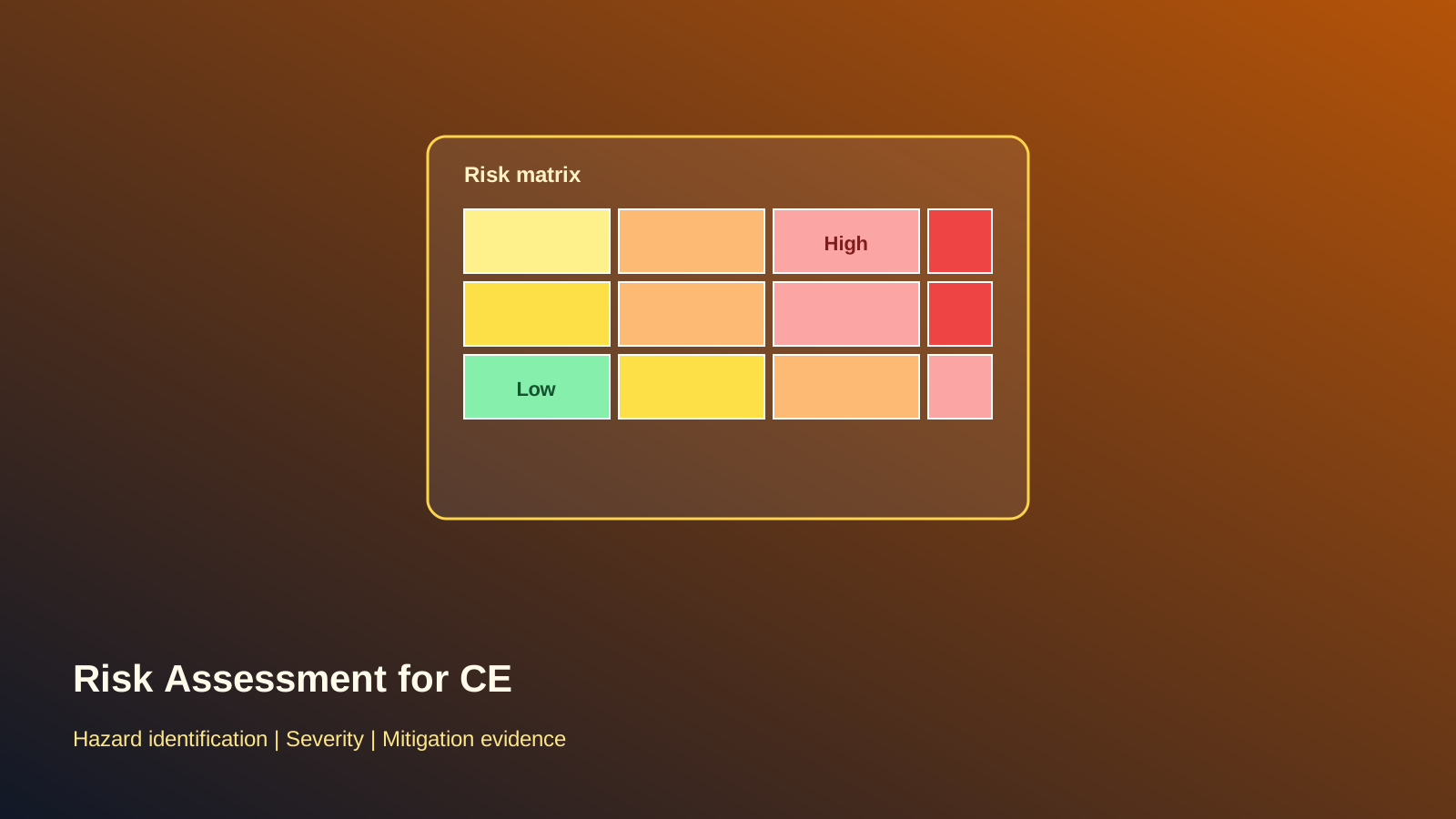
Risk Assessments:
- AI suggests potential hazards based on product category and characteristics
- Pre-populated risk matrices with industry-standard severity and probability ratings
- Automated control measure recommendations from best practices database
- Generated residual risk documentation
- Compliance checking against ISO 12100, ISO 14971, and other standards
Technical File Templates:
- Auto-filled templates using product data you've already provided
- Intelligent section suggestions based on applicable directives
- Cross-referencing to ensure consistency
- Placeholder identification for required information
- Formatting to match regulatory expectations
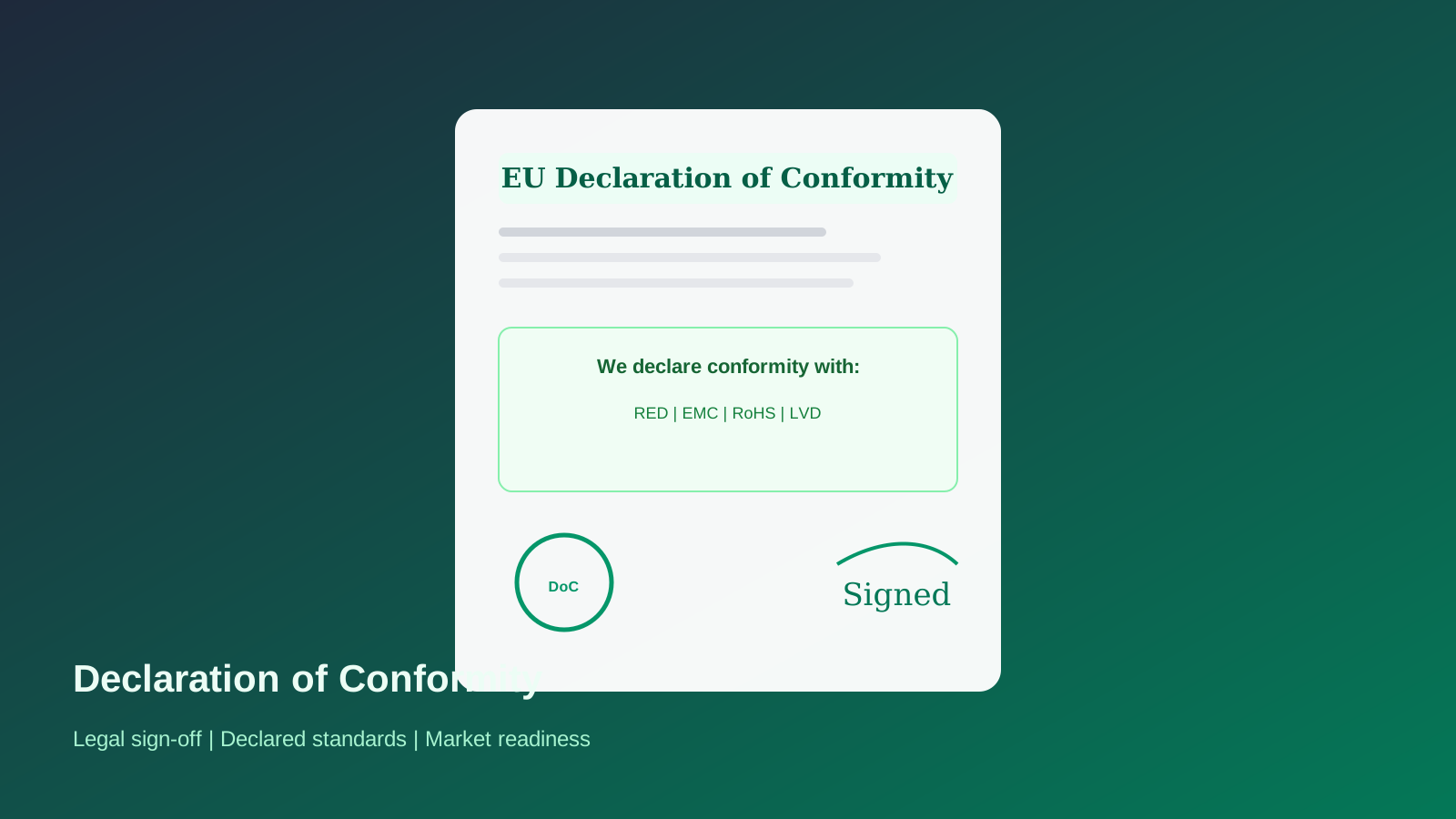
Declaration of Conformity:
- Correct DoC format for each directive
- Automatic population of directive references, standard numbers, and dates
- Integration of Notified Body information
- Multi-language generation
- Version control and digital signature support
User Manuals:
- Safety warning generation based on identified hazards
- Required regulatory statements and symbols
- Multi-language translation with technical accuracy
- Formatting to match industry standards
- Integration of pictograms and warning labels
3. Compliance Gap Analysis
AI reviews your documentation and identifies deficiencies before authorities do:
Missing Required Documents:
- Checklist generation for each applicable directive
- Real-time tracking of documentation completeness
- Priority ranking of missing items
- Impact assessment of gaps
Incomplete Sections:
- Content analysis to identify insufficient detail
- Comparison against requirement specifications
- Suggestions for additional information needed
- Templates for completing sections
Inconsistencies Across Files:
- Cross-document comparison
- Product specification matching
- Standard reference verification
- Date and version consistency checking
Areas Requiring Additional Testing:
- Test coverage analysis
- Standard requirement mapping
- Gap identification in test reports
- Laboratory recommendation based on missing tests
4. Real-Time Regulatory Updates
Stay current with changing regulations through AI-powered monitoring:
Automated Alerts:
- Monitoring of official EU databases (EUR-Lex, NANDO, etc.)
- News aggregation from regulatory bodies
- Standard organization update tracking
- Custom notifications for your product categories
Impact Analysis:
- AI assessment of how changes affect your products
- Priority scoring of regulatory updates
- Identification of required actions
- Timeline generation for compliance transitions
Update Recommendations:
- Specific guidance on necessary changes
- Documentation revision suggestions
- Testing requirement updates
- Cost and timeline estimates for compliance updates
Proactive Compliance:
- Advance warning of upcoming changes
- Preparation time before enforcement dates
- Competitive advantage through early adoption
- Risk mitigation for regulatory transitions
5. Natural Language Assistance
Get instant answers to compliance questions through AI-powered chatbots and assistants:
Standard Interpretations:
- Plain language explanations of complex requirements
- Context-specific guidance for your product
- Examples and case studies
- References to official guidance documents
Testing Requirements:
- Identification of required tests
- Laboratory recommendations
- Cost and timeline estimates
- Test procedure explanations
Documentation Guidance:
- Step-by-step instructions for creating compliance documents
- Best practice examples
- Common mistake warnings
- Quality checking and review
24/7 Availability:
- No waiting for consultant callbacks
- Instant access to compliance knowledge
- Consistent answers across your team
- Learning system that improves with use
Real-World Benefits
Manufacturers using AI-powered compliance platforms report transformative results:
Time Savings
- 70% reduction in time to certification (from 6-8 months to 2-3 months)
- 80% faster documentation creation
- 90% reduction in consultant meeting time
- Accelerated market entry and revenue generation
Cost Reductions
- 60% cost savings compared to traditional consultants (from €30,000 to €12,000 average)
- 50% reduction in testing costs through pre-compliance screening
- 40% lower revision and correction costs
- Elimination of many travel and meeting expenses
Quality Improvements
- 95% fewer documentation errors requiring correction
- 90% reduction in market surveillance findings
- Enhanced audit readiness with complete, consistent documentation
- Better risk management through comprehensive hazard identification
Business Impact
- Faster time-to-market providing competitive advantage
- Reduced compliance burden allowing focus on product innovation
- Improved scalability for product portfolio expansion
- Enhanced confidence in regulatory compliance
- Better resource allocation and planning
Case Studies
Small Electronics Manufacturer:
Previously spent €35,000 and 8 months achieving CE marking with consultants. Using AI platform: €8,000 and 2.5 months. Saved €27,000 and launched 5 months earlier.
Medical Device Startup:
Reduced initial compliance costs by 65% (€120,000 to €42,000) and accelerated FDA and CE mark timeline by 40%, reaching market 9 months sooner than projected.
Industrial Equipment Company:
Manages compliance for 50+ product variants with 2-person team using AI platform. Previously required 6-person team with traditional approach.
The Future of Compliance
As AI technology advances, we can expect even more transformative capabilities:
Predictive Compliance Monitoring
- AI prediction of likely regulatory changes based on trends
- Proactive product design guidance for future requirements
- Risk scoring for regulatory non-compliance
- Automated compliance health monitoring
Automated Testing Requirement Generation
- AI generation of complete test plans
- Optimization of test sequences to minimize cost
- Virtual pre-compliance testing through simulation
- Automated test data analysis and reporting
Real-Time Regulatory Change Tracking
- Instant notification of relevant regulatory updates
- Automated impact assessment across product portfolio
- Integration with product lifecycle management systems
- Regulatory intelligence and trend analysis
Enhanced Collaboration Tools
- AI-facilitated coordination between teams, suppliers, and testing labs
- Automated workflow management
- Intelligent task assignment and tracking
- Knowledge sharing and best practice distribution
Supply Chain Integration
- Component compliance verification
- Supplier risk assessment
- Automated supply chain documentation
- Traceability and change management
- Integration with ERP and PLM systems
Digital Twins and Virtual Testing
- Virtual product models for compliance simulation
- Pre-testing before physical prototypes
- Design optimization for compliance
- Reduced physical testing requirements
Blockchain for Compliance Records
- Immutable compliance documentation
- Secure certificate management
- Supply chain transparency
- Automated audit trails
Getting Started with AI Compliance
Start your AI-powered compliance journey with these steps:
1. Choose the Right Platform
- Evaluate product category support: Ensure platform covers your industry
- Assess directive coverage: Verify all applicable regulations included
- Check integration capabilities: Consider compatibility with existing systems
- Review pricing models: Understand subscription costs and ROI
- Test user experience: Use trial versions to assess usability
2. Input Basic Product Information
- Product descriptions and specifications
- Intended use and target markets
- Bill of materials and component data
- Manufacturing processes and locations
- Existing documentation and test reports
3. Follow AI-Guided Workflows
- Step-by-step guidance through compliance process
- Automated task generation and prioritization
- Progress tracking and milestone management
- Intelligent reminders and deadline tracking
- Collaborative features for team coordination
4. Generate Documentation Automatically
- AI-created technical files, risk assessments, and DoCs
- Review and approve AI-generated content
- Customize templates to match your requirements
- Maintain version control and change history
- Export in required formats
5. Maintain Compliance with Automated Updates
- Continuous regulatory monitoring
- Automated alerts for relevant changes
- Guided update processes
- Re-validation workflows
- Audit preparation assistance
Implementation Best Practices
Start Early
- Integrate AI tools during product design phase
- Use compliance insights to inform design decisions
- Build compliance into development workflows
Train Your Team
- Ensure staff understands AI tool capabilities
- Develop internal expertise for tool optimization
- Establish governance for AI-generated content review
Maintain Human Oversight
- Review AI recommendations critically
- Validate generated documentation
- Maintain engineering judgment for complex decisions
- Use AI as assistant, not replacement for expertise
Build Gradually
- Start with one product or product line
- Expand usage as confidence grows
- Develop templates and workflows specific to your business
- Share learnings across organization
Conclusion
The future of compliance is here, and it's more accessible than ever for manufacturers of all sizes. AI-powered platforms are democratizing regulatory compliance, reducing barriers to market entry, and enabling manufacturers to compete globally.
By embracing AI-powered compliance tools, manufacturers can:
- Reduce costs and accelerate time-to-market
- Improve documentation quality and consistency
- Stay current with regulatory changes
- Scale compliance activities efficiently
- Focus resources on product innovation rather than administrative burdens
The compliance landscape is undergoing a fundamental transformation. Manufacturers who adopt AI-powered solutions position themselves for competitive advantage, operational efficiency, and sustainable growth in an increasingly regulated global marketplace.